

The digital landscape is a vast, ever-expanding ocean, and for organizations navigating its treacherous currents, a storm is brewing.
On November 4, 2025, Proofpoint, Inc., a stalwart in the cybersecurity and compliance arena, unveiled its second annual Data Security Landscape report, sending a clear, albeit unsettling, message.
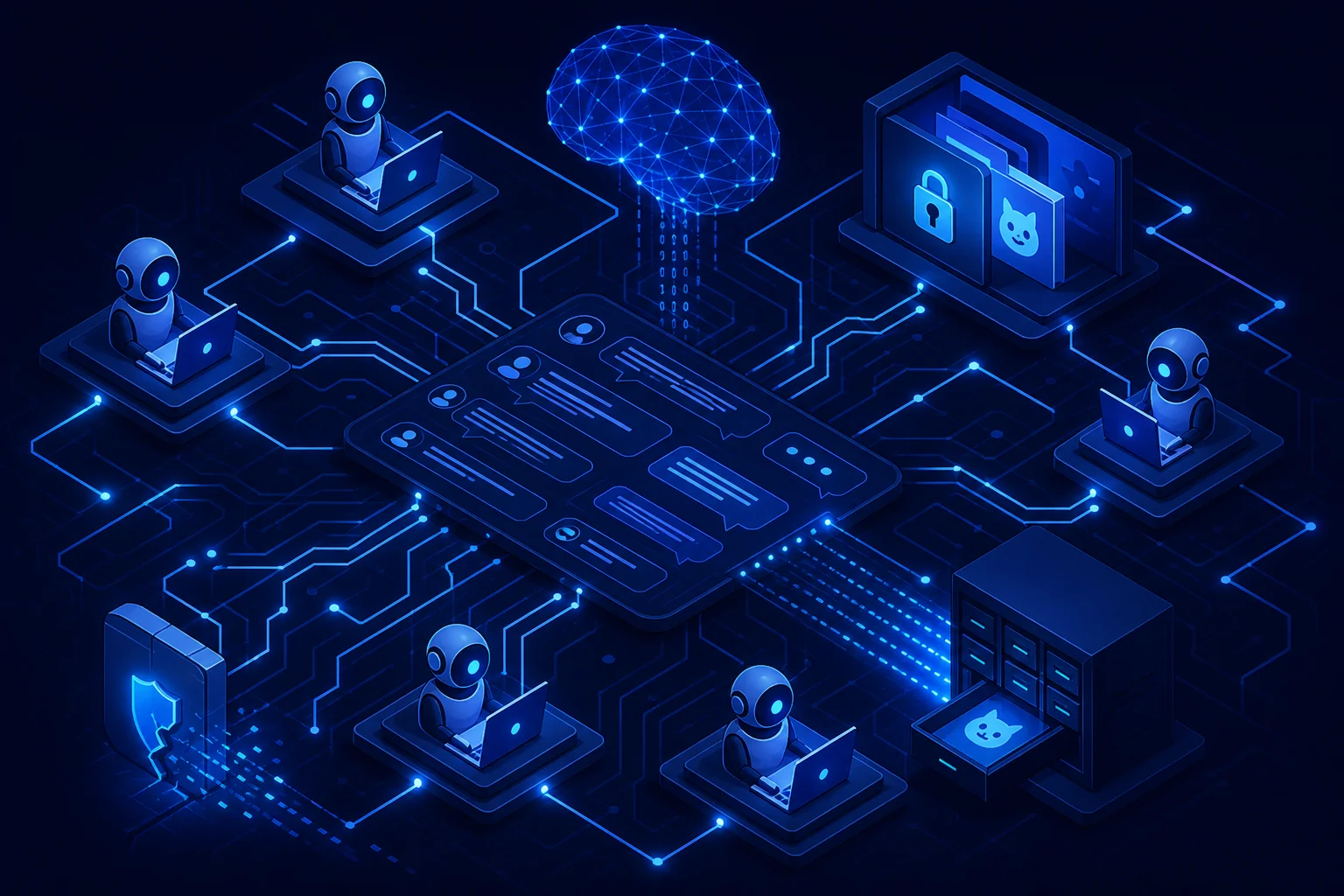
The report highlights the convergence of explosive data growth, rampant AI adoption, and the stealthy emergence of AI agents in the workplace, creating a perfect storm of unprecedented data security challenges.
What we are witnessing isn’t merely an evolution of threats, but a fundamental reshaping of the battlefield, where the very tools designed for progress are becoming new vectors for widespread data loss.
It’s a stark reality check.
For years, cybersecurity professionals have grappled with the sheer volume of data, a seemingly endless torrent generated by every click, every transaction, every connected device.
This digital sprawl, distributed across on-premise servers, myriad cloud platforms, and countless SaaS applications, has made comprehensive visibility and control an elusive dream for many.
Now, layer onto this a new, potent accelerant: generative AI.
The promise of AI is transformative, offering unparalleled efficiencies and sparking creativity.
Yet, as with any powerful technology, its widespread, often unmanaged, adoption is introducing a Pandora’s Box of vulnerabilities.
Employees, eager to harness AI’s capabilities, are increasingly feeding sensitive corporate data into public AI models, often without a second thought to the underlying security implications.
This phenomenon, often dubbed “shadow AI, “ bypasses established security protocols and creates a massive, unmonitored outflow of potentially proprietary and confidential information.
It’s a classic case of good intentions paving the road to data exfiltration, where the very act of seeking productivity inadvertently exposes an organization’s crown jewels.
The intellectual property, customer lists, strategic plans – all become fodder for large language models, the ultimate destination of which remains opaque to the original data owner.
This isn’t just a theoretical risk; it’s happening every day, in every industry, as the lines between personal productivity and corporate data handling blur.
Adding another layer of complexity, and indeed, a new frontier of risk, is the advent of AI agents.
These autonomous software entities, capable of executing tasks and accessing information with minimal human oversight, represent a paradigm shift.
Imagine an AI agent tasked with summarizing internal documents, or even managing customer interactions.
While incredibly efficient, their ability to autonomously access and process vast swathes of data creates new attack surfaces.
A compromised AI agent could become an incredibly potent insider threat, capable of exfiltrating data at machine speed and scale, far beyond what any human actor could achieve.
The implications are profound: how do you secure an entity that operates independently, learns, and interacts with your most sensitive information?
The traditional perimeter security, once the bedrock of corporate defense, feels increasingly quaint in this new era.
The convergence highlighted by Proofpoint is not just about new technologies; it’s about the interplay, the cross-pollination of risks.
Explosive data growth means there’s more sensitive data than ever to be exposed.
AI adoption means there are new, often unmonitored, channels for that data to flow out.
And AI agents mean there are new, autonomous entities that can facilitate this outflow, either maliciously or through compromise.
This isn’t merely an additive problem; it’s multiplicative.
Each factor amplifies the others, creating a threat landscape that feels genuinely unprecedented.
What’s particularly concerning is the speed at which these changes are occurring.
Organizations are scrambling to keep pace, often finding their security policies and technological safeguards lagging far behind the rapid deployment of new AI tools by their workforce.
It speaks to a fundamental disconnect: the pace of innovation is outstripping the pace of security governance.
This reactive stance leaves organizations perpetually playing catch-up, patching holes after data has already leaked, rather than proactively building resilient defenses.
Ultimately, the human element remains central to this unfolding drama.
While AI introduces new vectors, it’s human behavior – the eagerness to adopt, the lack of awareness, the occasional malicious intent – that often triggers the initial breach or misuse.
Proofpoint’s findings underscore that even with the most sophisticated technologies, the weakest link can still be the individual interacting with them.
Training and awareness campaigns, once considered foundational, now need to evolve dramatically to address the nuanced risks of AI interaction.
The report serves as a clarion call.
It’s a demand for organizations to move beyond incremental adjustments and embrace a wholesale re-evaluation of their data security strategies.
This means not just fortifying existing perimeters, but understanding the new data flows introduced by AI, gaining visibility into shadow AI activities, and developing robust controls for autonomous AI agents.
The future of data security isn’t just about protecting against external threats; it’s about managing an increasingly complex, intelligent, and often self-directed internal ecosystem where data loss is a constant, looming shadow.
The time for a paradigm shift is not coming; it is already here.


Leave a Reply