

The digital frontier of enterprise is undergoing a profound transformation, as artificial intelligence moves beyond mere automation to become an active, collaborative partner in the workplace.
This new “agentic workspace,” where human ingenuity meets the relentless efficiency of AI agents, promises unprecedented productivity.
Yet, like any revolution, it brings with it a unique set of vulnerabilities, a shadow side where the very intelligence designed to empower can be exploited by unseen adversaries.
It is into this complex, high-stakes environment that Proofpoint Inc. has stepped, unveiling a suite of innovative solutions at its annual Protect 2025 conference in Sunnyvale, California.
These solutions are designed not just to defend, but to define the future of AI security.
Proofpoint’s announcement is more than just a product launch; it’s a strategic declaration in the escalating arms race of cybersecurity.
As organizations increasingly delegate critical tasks—from data analysis to sensitive decision-making—to autonomous AI agents, the attack surface expands exponentially.
Traditional security paradigms, long focused on human endpoints and network perimeters, are proving woefully inadequate for a world where an AI agent could inadvertently leak proprietary data or be maliciously manipulated to exfiltrate sensitive information.
This urgency underpins Proofpoint’s four industry-first solutions, a comprehensive response to what many cybersecurity experts are calling the defining challenge of the next decade.
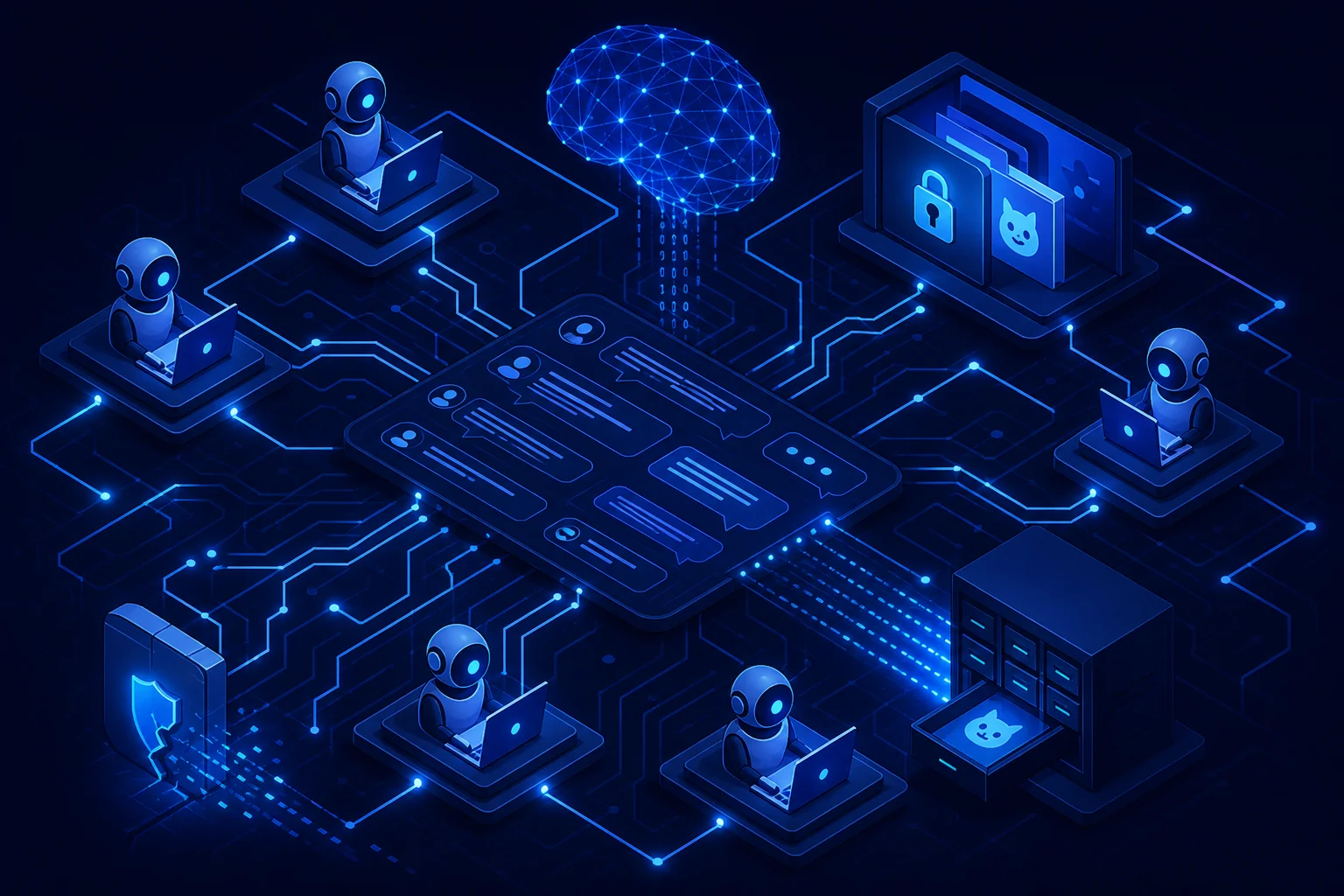
At the heart of Proofpoint’s new offerings are two groundbreaking tools that fundamentally shift the security focus to the AI agents themselves.
Proofpoint AI Guardian stands as a sentinel, providing real-time monitoring and protection for these digital collaborators.
This isn’t about securing the users of AI, but the AI itself, safeguarding it against malicious inputs and sophisticated adversarial attacks that could corrupt its decision-making or compromise its integrity.
Industry insiders view this as a pivotal moment, marking a definitive shift from a human-centric security model to a hybrid one, acknowledging AI agents as potential entry points for cyber threats.
Complementing this is Proofpoint Agent Governance, a robust framework designed to enforce policies on AI agent behaviors, acting as a digital conscience that prevents rogue actions capable of exposing corporate data or violating compliance mandates.
As reported by Help Net Security, these features secure the critical intersection where people, agents, and data converge, addressing foundational risks in these nascent agentic environments.
The implications for managed security service providers (MSSPs) are immense, opening avenues for new service offerings and potentially reshaping their revenue models in a competitive market.
Beyond securing the agents themselves, Proofpoint has recognized the paramount importance of data and communication in this collaborative ecosystem.
The company’s enhanced data loss prevention (DLP) for agentic workspaces is a significant leap forward, intelligently classifying and protecting sensitive information as it flows between human and artificial intelligence.
This builds upon Proofpoint’s established platform, integrating AI-driven threat detection that can anticipate risks before they materialize, a critical capability in fast-moving AI workflows.
Furthermore, Proofpoint Collaboration Security addresses the increasingly common scenario where AI agents participate directly in communication channels like Microsoft Teams or Slack.
Insights from SiliconANGLE underscore the necessity of this tool, developed in direct response to emerging threats such as AI agents being manipulated to exfiltrate data through seemingly innocuous conversations.
The collective sentiment on platforms like X, where cybersecurity experts lauded Proofpoint’s proactive stance, suggests that 2025 indeed marks a turning point for agentic security, moving beyond hype to tangible protection.
For Chief Information Security Officers (CISOs) grappling with the complexities of AI adoption, Proofpoint’s innovations offer a much-needed blueprint.
By integrating behavioral analytics, the solutions are designed to detect anomalies in agent-human interactions, a proactive measure that could prevent incidents akin to recent high-profile AI-related breaches.
As detailed in MSSP Alert, these solutions also empower MSSPs to deliver specialized services like agent auditing and compliance monitoring, potentially boosting margins in a fiercely competitive landscape.
Experts are unanimous: as AI agents become ubiquitous, handling everything from customer service to financial forecasting, the demand for such specialized security will surge.
Proofpoint’s strategic timing aligns perfectly with broader cybersecurity forecasts for 2025, which highlight challenges ranging from quantum threats to identity management.
Looking ahead, Proofpoint’s bold move positions it as a frontrunner in what is projected to be a multi-billion-dollar market for AI security.
By embedding intelligent agents within their own tools, Proofpoint not only fortifies defenses but also enhances workspace efficiency.
This enables organizations to scale their AI ambitions without being paralyzed by fear of the unknown.
Coverage from outlets like Tech Africa News emphasizes the global relevance of these solutions, addressing risks in diverse regions from North American enterprises to burgeoning African markets.
Online discussions among cybersecurity influencers on X, including those from The Cyber Security Hub, have amplified the urgency, sparking vital conversations on implementation strategies.
While challenges remain, particularly in integrating these cutting-edge tools with legacy systems, the collective buzz suggests that Proofpoint’s innovations could set new global standards for trust in agentic collaboration.
Ultimately, Proofpoint’s rollout at Protect 2025 underscores a fundamental truth of the digital age: as technology transforms the way we work, security must evolve in lockstep, not as an afterthought.
By tackling issues like agent governance and data protection head-on, the company is helping enterprises navigate the treacherous waters that have ensnared early AI adopters.
As one cybersecurity analyst aptly put it in an X post, these tools are “the missing piece” in making agentic workspaces viable for the long term.
With the adoption of AI agents expected to accelerate dramatically, industry watchers will be scrutinizing how these innovations perform in real-world scenarios.
This could potentially influence regulatory frameworks around AI security worldwide.
Proofpoint’s decisive step forward may well define the next era of enterprise protection, ensuring that the promise of AI is realized securely.


Leave a Reply