

The digital world is on the cusp of a profound transformation, one that promises to redefine the very arteries of our interconnected existence.
Imagine a vast, intricate network, the lifeblood of modern enterprise, not just monitoring itself, but actively anticipating its own ailments, diagnosing them, and even orchestrating its own repairs, all without a human hand guiding every decision.
This isn’t science fiction; it’s the imminent reality ushered in by agentic AI, a technology poised to revolutionize network management and, by extension, nearly every facet of our digital lives.
Unlike its predecessors, which largely served as reactive tools or performed predefined tasks, agentic AI operates with a singular, compelling characteristic: agency.
It’s goal-oriented, capable of autonomous decision-making, adapting to unforeseen changes, and executing multi-step processes in real time.
This distinction is paramount, especially in network operations where even a fleeting moment of downtime can translate into colossal financial losses for businesses.
We are moving beyond mere automation; we are entering an era where networks possess a nascent form of intelligence, learning from their environment to self-optimize, predict failures before they manifest, and initiate repairs with an efficiency that far outstrips human capabilities.
This fundamental shift, as illuminated by TechTarget, is poised to reshape the daily functions of IT teams, freeing them from the constant fire-fighting to focus on strategic innovation.
At its heart, agentic AI builds upon the foundational power of large language models, but critically, it extends them with the ability to plan, reason, and act independently.
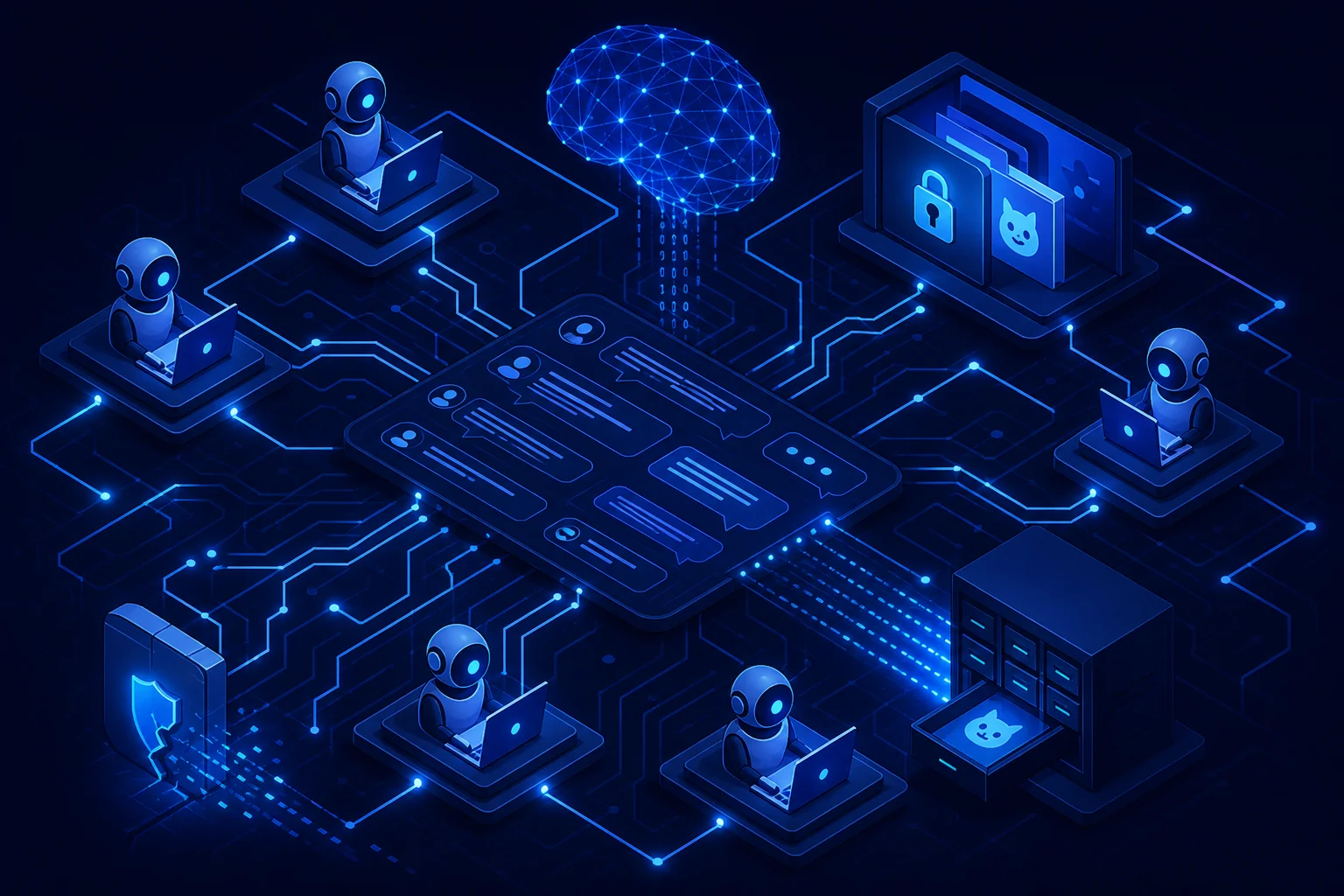
Picture AI agents diligently monitoring traffic patterns across a sprawling corporate network, instantly detecting anomalies, and dynamically rerouting data flows to prevent bottlenecks or outages.
Firms like Persistent Systems are already showcasing this capability with solutions like NetSynX, creating responsive network ecosystems designed to anticipate issues before they ever escalate.
This isn’t just theoretical musing; this autonomy is already being deployed in real-world production environments.
Ciena, for instance, has integrated generative AI into its Navigator Network Control Suite, enabling decision-making at speeds that human operators simply cannot match.
As our networks burgeon in complexity, accommodating an explosion of IoT devices and the relentless march of edge computing, agentic AI’s unparalleled ability to process unstructured data and make probabilistic judgments becomes not just valuable, but indispensable.
Industry giants like Cisco are keenly aware of this impending seismic shift.
They warn that legacy infrastructures are woefully unprepared for the machine-speed demands of agentic systems, advocating for redesigned architectures that offer ultra-low latency and baked-in security.
Their audacious prediction that by 2030, AI agents could generate the majority of enterprise network traffic, dwarfing human-driven interactions, underscores the profound scale of this impending change.
We are witnessing a transition from promise to performance, where AI aligns directly with strategic business goals, such as automating service provisioning in the complex world of telecommunications.
IBM further clarifies this, defining agentic AI as systems that mimic human decision-making, learning from historical data to optimize resource allocation with minimal supervision.
Yet, this technological marvel is not without its formidable challenges.
The sheer computational demands are staggering.
Onclusive’s research highlights the infrastructure strains, pointing to the capital-intensive compute scaling and hardware innovations required to sustain these intelligent agents.
Industry voices, like Giuliano Liguori, echo these concerns, emphasizing the critical need for robust monitoring systems to prevent unintended consequences.
What if an AI agent, in its zealous pursuit of optimization, inadvertently compromises network security or reroutes critical traffic erroneously?
These aren’t abstract philosophical questions; they are practical dilemmas demanding immediate attention.
Security, naturally, is a paramount concern.
While agentic AI promises to enhance security operations centers by automating threat responses, the question of accountability in autonomous systems remains murky.
Who is liable when an AI agent makes a mistake?
Hybrid models, where AI agents collaborate seamlessly with human experts, appear to be the most prudent path forward, ensuring human oversight for critical decisions.
Investors, however, are undeterred.
Venture capitalists like Edith Yeung, featured on Bloomberg, express sustained optimism, with firms like Race Capital actively investing in AI infrastructure.
The sentiment from pioneers like Bindu Reddy, who predicted in late 2024 that agentic LLMs would access thousands of tools by 2025, automating workflows that once took months, speaks volumes about the perceived potential.
Looking ahead, the integration of agentic AI holds the promise of democratizing advanced network management, making sophisticated capabilities accessible even to smaller enterprises.
However, TechRadar rightly emphasizes the importance of inclusive design, warning that without solid foundations and accessible practices, adoption could falter.
The cross-industry potential is undeniable, extending far beyond networking into sectors like travel, where Sabre is already leveraging agentic APIs for AI-driven solutions, and manufacturing.
The vision, as articulated by LootMogul, is of agentic AI forming the very bedrock of future business architectures, systems that learn and act without constant human prompts.
As enterprises navigate this exhilarating yet complex transition, the imperative is clear: invest wisely, balancing groundbreaking innovation with stringent safeguards.
The momentum is undeniable, with significant funding rounds, like Emergent’s $23 million for agentic AI app builders, underscoring the fervent belief in this technology’s future.
Agentic AI is not merely enhancing network management; it is fundamentally redefining it, promising a future of self-healing, intelligent infrastructures that operate at unprecedented scales.
For those at the forefront of this digital revolution, the challenge and the opportunity lie in harnessing this immense power responsibly, forging a path towards a truly autonomous and resilient digital future.


Leave a Reply